Compare
Vivaldi concert or La Fenice
A Vivaldi concert or La Fenice: which is better for music lovers in Venice? What each gives you, what each costs in flexibility, and how to combine them.
Book the Four Seasons concert ↗Quick answer
Choose the Vivaldi concert if you want to hear music. Choose La Fenice if you want to see an opera house. The concert at Palazzo Zaguri is a live chamber performance of the Four Seasons, with a music museum on the same ticket. The La Fenice ticket is a self-guided visit to the theatre with an audio guide and does not include a performance. Many music lovers do both, on different days.
The short answer
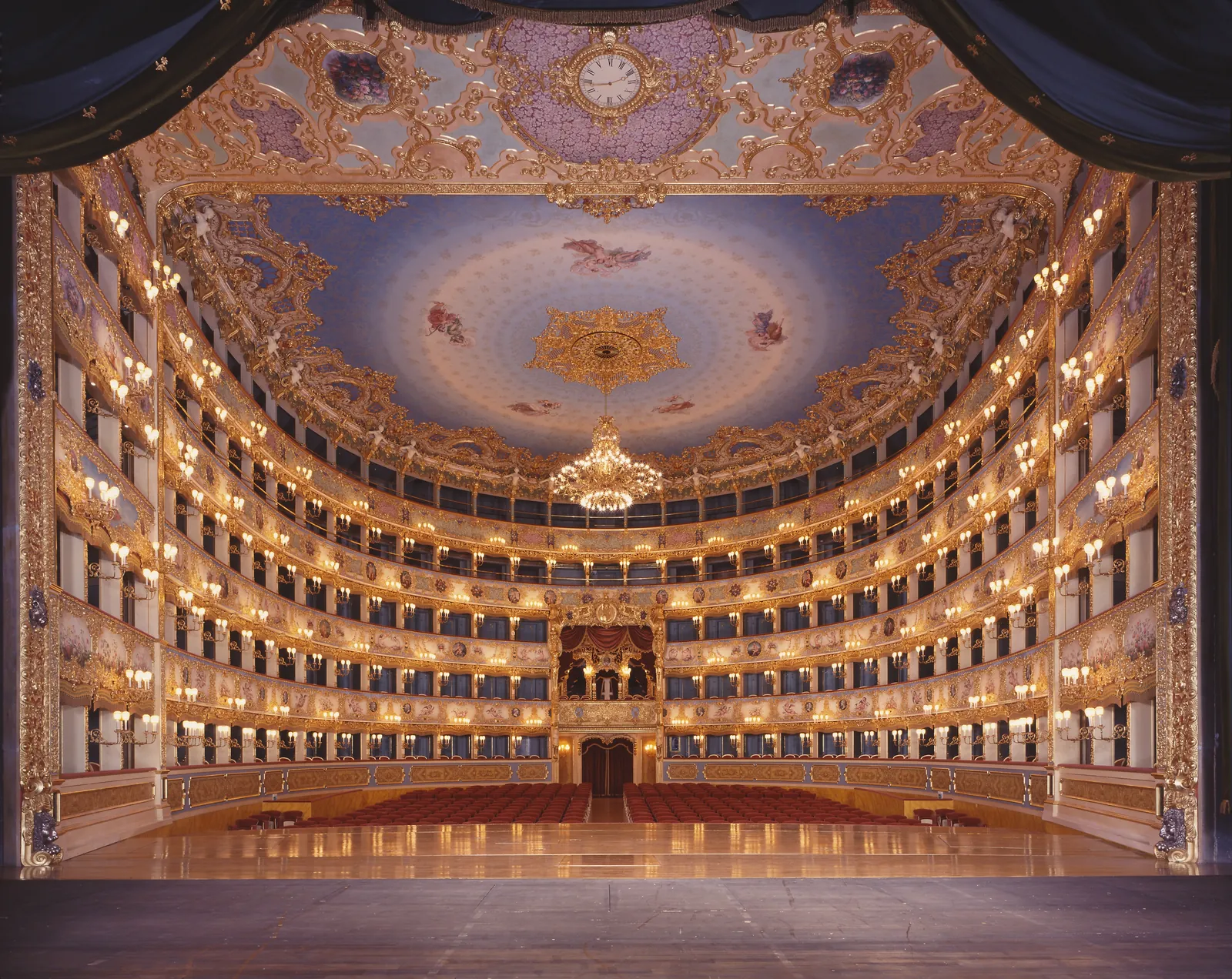
The two bookings answer different questions. The Vivaldi concert is for the ears: a baroque ensemble plays the Four Seasons in a palace on Campo San Maurizio. The La Fenice ticket is for the eyes: the inside of one of Italy’s best-known opera houses, toured at your own pace with an audio guide. With room for just one booking and music as your reason for coming, take the concert. With a taste for opera history and architecture, the visit is the better hour. A single day can hold both.
What La Fenice is
Wikipedia says La Fenice, the Phoenix Theatre, was inaugurated on 16 May 1792, with the original house designed by Gianantonio Selva. Its name reflects the company’s ability to rise from the ashes after losing earlier theatres to fire. It faces Campo San Fantin, which Wikipedia describes as the only historic Venetian theatre facing an open space. Its capacity is given as 1,126, with a movable orchestra-pit platform adding 104 seats. This is a large opera house, quite unlike the intimate palace setting of the Zaguri concert, and the scale of the room is the first thing that separates the two evenings.
Fire, loss and rebirth
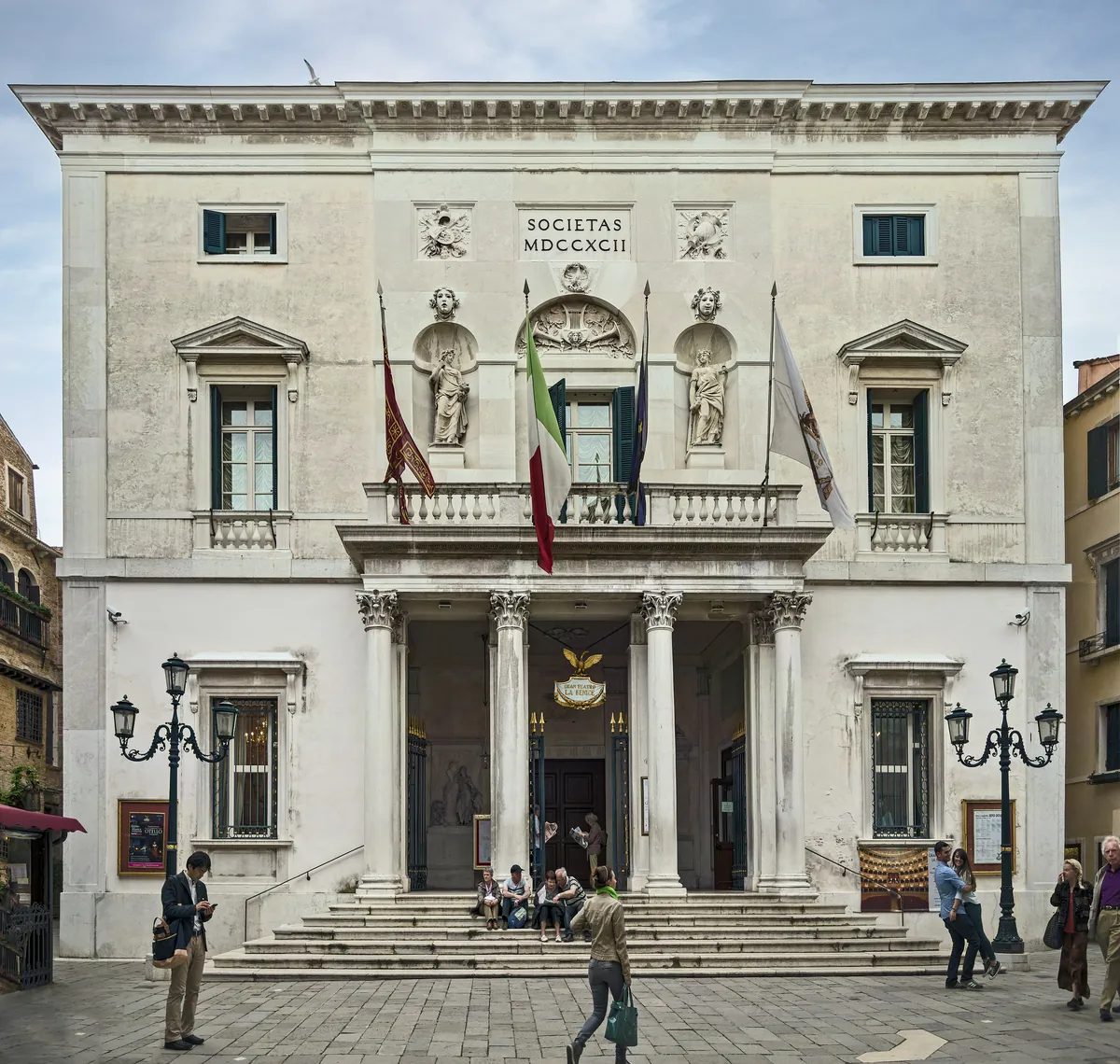
The Teatro San Benedetto, Venice’s leading opera house, burned in 1774, and La Fenice was built as its successor. A fire caused by a recently installed heater destroyed La Fenice on 13 December 1836, and it reopened on 26 December 1837. Arson destroyed it again on 29 January 1996, and two electricians were convicted in 2001. Aldo Rossi designed the reconstruction after the 1996 fire, and the theatre reopened in the 2000s, Wikipedia says. What you walk through today is a rebuilt house, shaped by two fires and two reconstructions.
What the visit includes
The La Fenice ticket is a skip-the-line entry to the theatre with an audio guide offered in seven languages: English, French, German, Italian, Portuguese, Russian and Spanish. You need to bring ID to receive the audio guide. The ticket is valid for six months from purchase, and the date of validity is the date from which you can visit. The theatre’s own website says its timetable is subject to last-minute changes, and the ticket page tells you to check the schedule online to confirm the theatre is open. The theatre describes the visit as a look at the stuccos and gold of its prestigious venues.
The catch with the visit
A La Fenice visit ticket cannot be refunded, and the theatre’s visiting timetable may shift at short notice. The Four Seasons ticket is the looser commitment, because a refund up to 24 hours before is on offer when you book through GetYourGuide, and payment can wait. Compare both prices in the calendar and read the cancellation line before paying. A fixed ticket suits a fixed date; a refundable one suits a trip where weather, queues or a tired family might reshuffle the day. In practice, choose the visit only once your date is certain, and keep the concert as the booking you can still move if a day goes wrong.
What a performance at La Fenice means
Seeing the house empty is different from hearing music in it. Wikipedia lists premieres that happened here: Bellini’s I Capuleti e i Montecchi in 1830, Verdi’s Ernani in 1844, and over the next thirteen years Attila, Rigoletto, La traviata and Simon Boccanegra. Rossini mounted Tancredi here in 1813 and Semiramide in 1823. A performance is sold by the theatre, not by this site, and the programme is on the theatre’s own website. Wikipedia adds that the Venice New Year’s Concert tradition started to celebrate the 2003 reopening. A performance is the answer for opera lovers who plan well ahead and want a full evening in the house itself.
What the concert gives you
Vivaldi’s Four Seasons began as four violin concertos, printed in Amsterdam in 1725, each carrying a sonnet about spring birdsong, a summer storm, an autumn hunt or winter ice. At Palazzo Zaguri they are played in a room made for people, by an ensemble founded in Venice in 1987. The same ticket opens the Museo della Musica, in the church of San Maurizio, whose collection spans 300 years of Italian violin making. Programmes shift, so expect a sample of the repertoire instead of a fixed show.
A link between the two
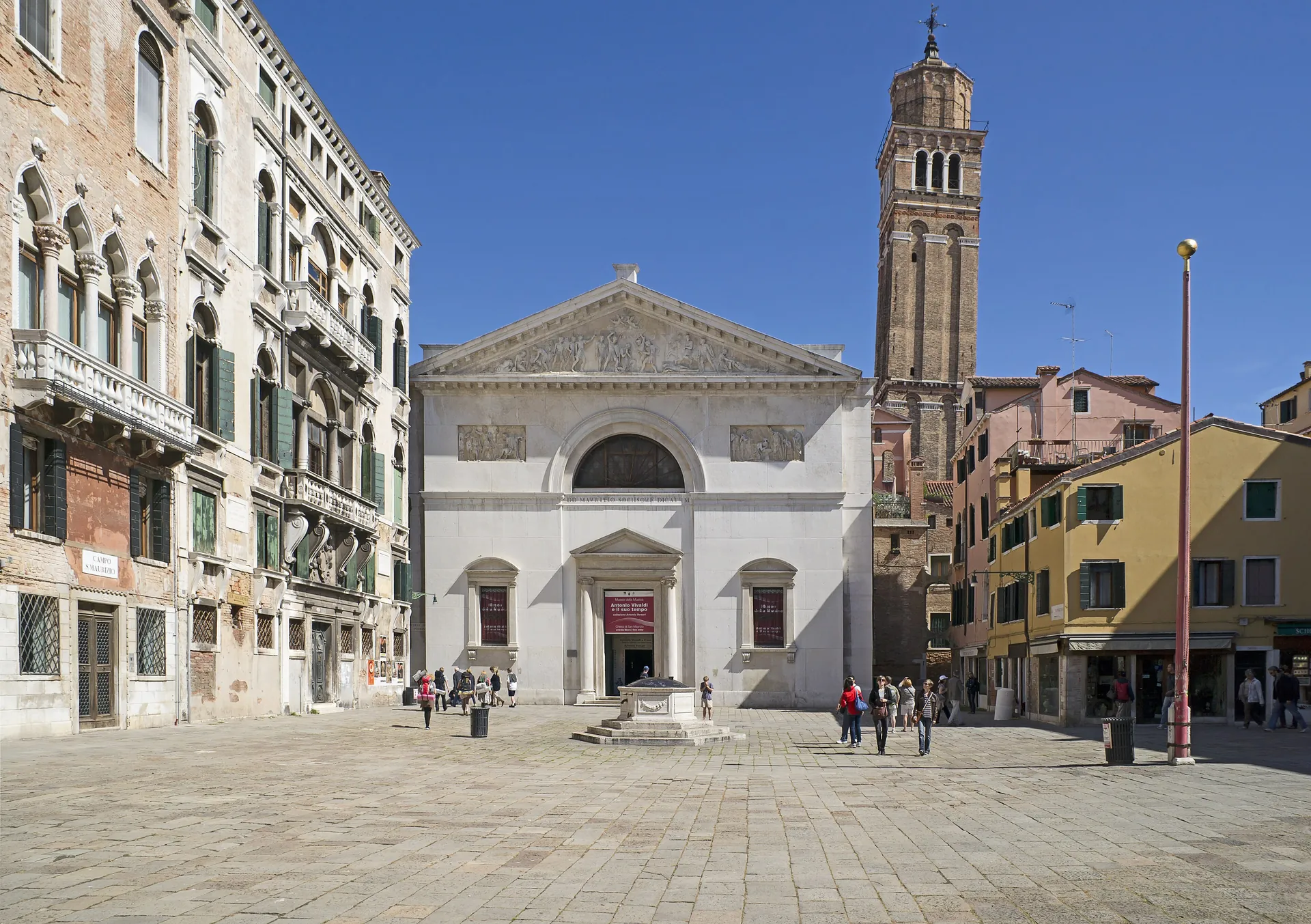
The two buildings share an architect. Wikipedia says Giannantonio Selva rebuilt the church of San Maurizio in 1806. The Museo della Musica adds that the church was demolished and rebuilt between 1795 and 1806, with Count Pietro Zaguri credited with the design alongside Selva and Antonio Diedo. So the museum where you see the violins stands in a church linked to the architect of the opera house, which makes a day with both feel connected.
How to combine them
If you have a free day, put the La Fenice visit in daylight and the concert at the time your calendar shows. Both sit in the historic centre, so you will not need a boat between them. Check the theatre’s visit schedule first, because it is the less flexible of the two bookings. Then check the museum’s own opening hours for the day you choose the concert, since the museum visit is part of that ticket. The museum is the easy pairing: its visit is part of the concert ticket, so it needs no extra booking, and it puts names to the instruments you will hear. La Fenice then adds an opera house that has been rebuilt after fire more than once.
Who this isn’t for
Give the La Fenice visit a miss if you want music as well as architecture, because no performance comes with it. Give the concert a miss if you are set on the great opera house, a full orchestra or a staged opera. Give both a miss if fixed times irritate you: each concert date has its own start, and the theatre’s visit hours can move at short notice. For a looser day, a guided walk through the old centre fits around either.
A one-minute decision
Ask yourself what you want to leave with. If it is the sound of the Four Seasons in your head, book the concert. If it is the memory of a gilded auditorium and a story of fires and rebuilding, book the visit. If it is both, book both and give each its own half-day. If you can only afford one booking and care mostly about music, the concert ticket also gives you a museum of instruments, so one booking carries both the music and the instruments. If you want both, book the less flexible visit first, then fit the concert around it.
- Want to hear Vivaldi live: the concert
- Want to see the opera house: the La Fenice visit
- Want a full opera evening: the theatre’s own programme
Frequently asked questions
Which is better, a Vivaldi concert or La Fenice?
Choose the concert to hear music and the La Fenice visit to see an opera house. The visit does not include a performance.
Does the La Fenice ticket include a concert?
No. It is a self-guided visit with an audio guide in seven languages.
Which is easier to cancel?
The concert ticket allows free cancellation up to 24 hours ahead. The La Fenice visit ticket is non-refundable.
Do I need ID at La Fenice?
Yes, to receive the audio guide, according to the visit’s booking page.
Is it possible to do both on one day?
Yes. Both are in the historic centre. Check the theatre’s visit schedule and the museum’s hours first.
Who built La Fenice?
Gianantonio Selva designed the original house, which opened in 1792, according to Wikipedia.
Sources